
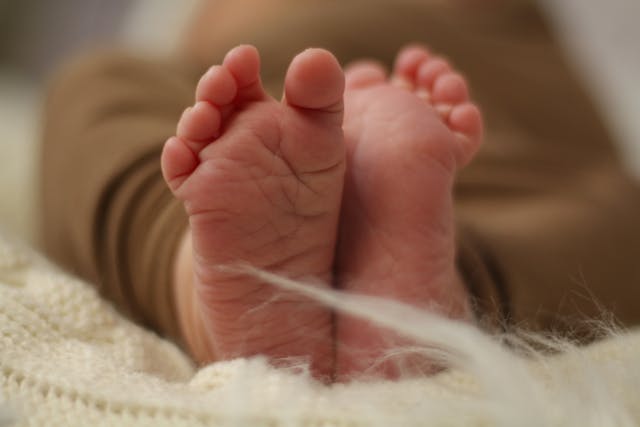
There are moments in life that feel almost impossible to put into words.
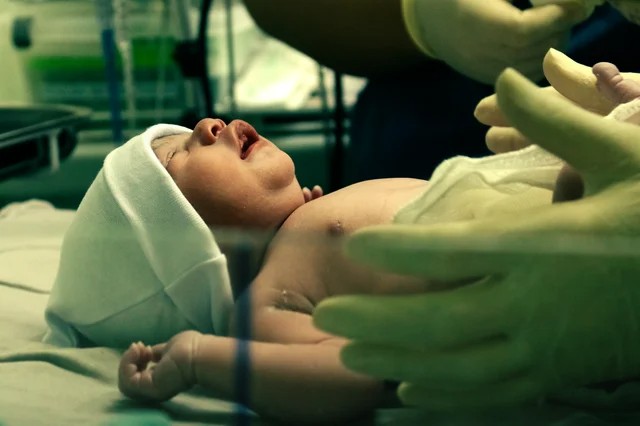 The first time you hear your baby cry.
The first time you see their face.
The first time their tiny body rests on your chest.
For many parents, birth is filled with anticipation, intensity, hope, and emotion all at once. We may prepare for labor, nursing or feeding plans, and postpartum recovery. But there is one remarkable window of time that often receives far less attention than it deserves: the very first hour after birth.
In a recent conversation on The Prepared for Parenthood Podcast, I had the privilege of speaking with neonatologist Dr. Raylene Phillips about what she calls The Sacred Hour—the first hour after birth where a baby and parent are hopefully given uninterrupted, protected time together skin-to-skin whenever medically possible.
And while it may sound simple in this age of constant distraction, this hour holds an extraordinary amount of biological, emotional, and relational significance.
Dr. Phillips shared how The Sacred Hour isn’t just about birth practices in the first hour after birth. It’s about connection – the connection that helps set a critical foundation for the relationship between a parent and child.
It’s about honoring biology and beginnings.
And it’s about understanding that moments of real presence can carry tremendous meaning.
What Is The Sacred Hour?
Dr. Phillips describes The Sacred Hour as the first uninterrupted hour after birth in which a newborn is placed directly skin-to-skin with their parent, ideally without unnecessary interruptions.
Historically, many hospitals followed routines that prioritized immediate newborn procedures in non-emergent births: weighing babies, footprints, medications, assessments, measurements, and checklists.
None of those tasks are unimportant.
But Dr. Phillips has noticed something during her work as a neonatologist. Babies would be placed on a mother’s chest immediately after birth, but moments later they were often removed so routine care could begin.
What was being missed, she wondered?
The answer turned out to be: quite a lot.
As she and colleagues looked more deeply into newborn physiology, breastfeeding behaviors, and attachment science, they realized that the first hour after birth isn’t simply an empty waiting period between delivery and postpartum care.
It’s an active transition.
A profound one.
Because while parents are meeting their baby for the first time outside the womb, babies are also meeting the world.
And their bodies are working incredibly hard.
Need Support for Birth Trauma Treatment for You and Your Baby?
Babies Experience an Enormous Transition at Birth
Birth is not simply a location change.
For babies, it is one of the most dramatic physiological transitions they will ever experience.
Inside the womb, babies live in a warm, protected environment. Oxygen comes through the placenta. Circulation works differently. Sounds are muffled. Movement is contained.
Then suddenly—light.
Noise.
Air.
Gravity.
Cold.
Touch.
The baby’s body has to rapidly shift from life inside the womb to life outside of it.
Blood flow patterns change.
Lungs begin taking over oxygen exchange.
Temperature regulation begins.
Sensory input explodes.
It’s a tremendous adjustment.
Skin-to-skin contact helps ease that transition.
A parent’s chest provides warmth.
A familiar heartbeat.
A known voice.
A recognizable scent.
In many ways, the parent’s body acts almost like a bridge between the womb and the outside world.
And while modern medicine has become incredibly skilled at monitoring numbers and measurements, The Sacred Hour reminds us that connection itself is one of the most therapeutic elements that exists in life. In fact, connection can make the difference between surviving and thriving.
Skin-to-Skin Is More Than a Trend
If you’ve attended a birth class or spent time reading about postpartum care, you’ve probably heard recommendations for skin-to-skin contact.
Sometimes it can begin to sound like just another item on a parenting checklist.
But skin-to-skin isn’t a trend.
It is rooted in biology.
Research suggests skin-to-skin contact may support:
- Temperature regulation
- More stable heart rates
- Breathing regulation
- Reduced stress responses
- Breastfeeding initiation
- Oxytocin release
- Parent-infant bonding
- Infant-parent attachment
Parents often assume they are the ones comforting the baby.
But many families are surprised to discover something equally beautiful: babies regulate parents, too.
That first contact can slow breathing, quiet anxiety, and create a profound sense of connection between a parent and child.
It’s one of the earliest examples of co-regulation—the process of nervous systems responding to one another.
Babies Know More Than We Realize
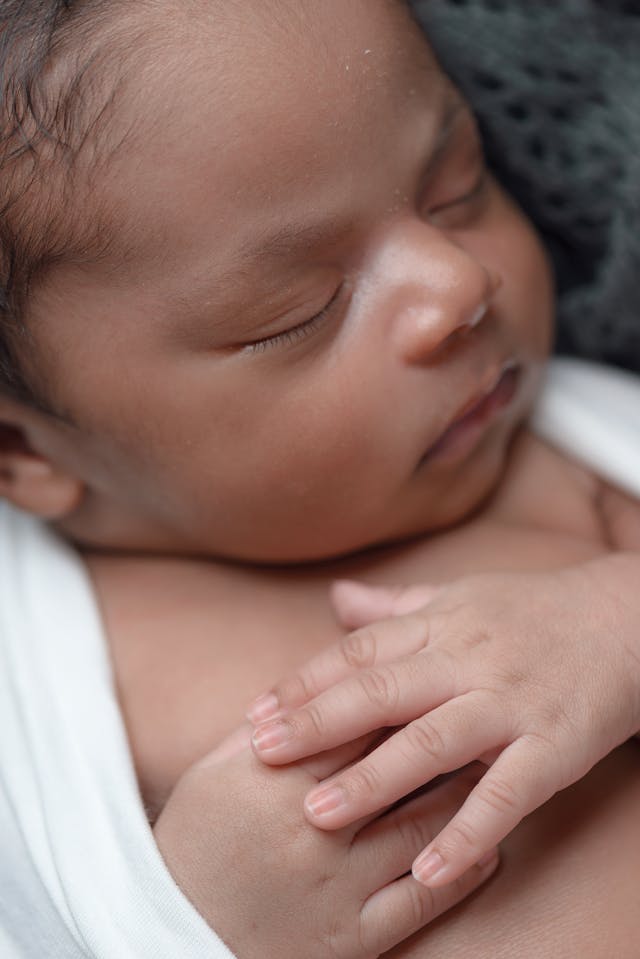 One of the most fascinating parts of my conversation with Dr. Phillips involved something called the breast crawl.
Many people have never heard of it.
And yet it is remarkable.
When babies are placed skin-to-skin immediately after birth and left uninterrupted, many naturally move toward the breast and begin feeding on their own.
Not because someone taught them.
Not because anyone positioned them.
Because they already know how.
As Dr. Phillips explains, babies are born with instinctive feeding behaviors.
Just as other mammals seek out nourishment after birth, human babies often do as well.
Watching it happen can feel almost unbelievable.
Tiny movements.
Small pauses.
Gentle searching.
And eventually, many babies find their way.
Need Support for Birth Trauma Treatment for You and Your Baby?
The Nine Stages of the Breast Crawl
Researchers and clinicians have described nine stages babies often move through during this process.
The stages are not rigid rules. Every baby is different.
But understanding them can help parents appreciate just how active newborns really are.
-
Birth Cry or First Breath
The first breath marks the beginning of life outside the womb.
-
Relaxation
Babies often become very still and quiet on their parent’s chest.
-
Awakening
Eyes begin opening. Babies slowly start taking in their environment.
-
Activity
Small arm and body movements increase.
-
Crawling
Babies begin pushing with their feet and moving toward the breast.
-
Rest
Babies frequently pause and rest.
-
Familiarization
Babies lick, nuzzle, smell, and explore.
-
Suckling
Many eventually latch and begin feeding.
-
Sleep
After all that work, babies (and birth parents) often settle into a deep sleep.
Many adults instinctively want to help during this process.
We adjust.
We guide.
We intervene.
And sometimes support absolutely is needed.
But one of Dr. Phillips’ gentle reminders was this: sometimes babies simply need time.
Can The Sacred Hour Happen After a C-Section?
Many parents worry that discussions about birth bonding only apply to vaginal deliveries.
But The Sacred Hour is not reserved for one kind of birth.
Dr. Phillips shared stories of families who experienced skin-to-skin after Cesarean births and still watched babies move through these same instinctive stages.
For parents who hoped for one kind of birth and experienced another, this can matter deeply.
Because birth plans sometimes change. Unexpected things happen. And while flexibility can be hard, connection remains possible.
Parents do not have to earn meaningful bonding experiences through perfect birth circumstances.
When Birth Doesn’t Go According to Plan
This part of our conversation felt especially important. Because not every family experiences uninterrupted togetherness.
Sometimes families have a difficult birth or an emergency.
Sometimes babies need NICU care.
Sometimes medical concerns require prolonged separation.
And sometimes parents look back and realize they didn’t know they could ask for something different.
If that’s part of your story, I want to pause here for a moment.
Because conversations about ideal circumstances can unintentionally create guilt. And guilt is heavy enough already.
Dr. Phillips spoke with incredible compassion about this. She believes that when separation occurs, something meaningful can feel interrupted.
But she also believes repair is possible. That message matters. Because parenthood is not built on perfection. It is built on relationships. And relationships are filled with moments of rupture and repair.
Need Support for Birth Trauma Treatment for You and Your Baby?
Connection Can Continue Long After Birth
One of the most moving stories Dr. Phillips shared involved her own experience.
After the birth of her first child, her baby was separated from her for observation. At the time, she accepted the recommendation and trusted the process. Only years later did she recognize that she experienced a sense of missing connection with her child.
Not lack of love. Not rejection. Something more subtle. A feeling that an early piece of their beginning had been interrupted.
Eventually, through later work and understanding, she was able to revisit and repair aspects of that experience—even when her child had become an adult.
I think many parents need to hear that.
Because there can be enormous grief around birth experiences.
Parents wonder:
Did I miss something?
Did I ruin my child’s attachment?
Did I get it wrong?
The answer is no.
Attachment is not a single moment.
It is a relationship built over thousands of moments.
Eye contact.
Responding.
Holding.
Repairing. Repairing again.
Showing up.
Trying. Trying again.
Connection continues.
Talking to Babies Matters More Than We Think
One of my favorite parts of our conversation involved something beautifully simple.
Dr. Phillips talks to babies.
She talks to them during difficult moments. She explains what is happening. If a newborn requires medical support, she tells them:
“We’re here to help you.”
She encourages parents to speak to babies during pregnancy, labor, NICU experiences, and separations.
Perhaps babies do not understand language in the way adults do. But they understand tone. Presence. Emotion. Safety.
Many parents already instinctively do this.
You rub your belly during pregnancy.
You narrate diaper changes.
You whisper, “I’m here.”
That instinct matters more than we realize.
The Heart of The Sacred Hour
At its core, The Sacred Hour is not about creating perfect birth experiences. Everyone’s birth is different.
The Sacred Hour is not another parenting standard to meet. It is not about pressure.
It is an invitation. An invitation to slow down. To honor beginnings. To recognize that biology and connection are deeply intertwined. To protect moments that deserve protection whenever possible.
And perhaps most importantly, it reminds us that relationships begin long before babies can speak. For expectant parents, this conversation offers awareness. For postpartum parents, perhaps it offers validation. And for parents carrying grief around birth or separation, maybe it offers hope.
Because while first moments matter, they are not the whole story.
Love continues.
Repair continues.
Connection continues.
And sometimes the most important work in parenting isn’t getting every moment right.
It’s returning, over and over again, and saying:
I’m here.
Need Support for Birth Trauma Treatment for You and Your Baby?
Click here for more information on Birth Trauma Treatment.






Leave A Comment